
Tsaone Kabomo
Last week, we shared the exciting news that Credbase is now a Licensed Credit Bureau—officially recognised and regulated to operate within Botswana’s financial system. But what exactly does that mean? And why should consumers, lenders, and businesses care?
Let’s break it down.
What Is a Credit Bureau?
The International Finance Corporation (IFC) defines a credit bureau as “an institution that collects information from creditors and available public sources on a borrower’s credit history.”A credit bureau compiles data on individuals and small businesses, including contact information, credit repayment history, court judgments & credit status
This information is used to generate comprehensive credit reports, which are shared—under lawful conditions—with approved stakeholders such as Lenders, Debt collection agencies, Employers, Landlords and Consumers themselves. The goal is to create a clearer picture of a person’s affordability and creditworthiness—how they’ve managed debt in the past and how likely they are to repay in the future.
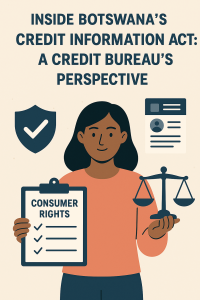
These credit reports may also include a credit score, giving lenders a quick, data-driven way to assess risk. (We touched on credit scores in our previous blog post.) Bureaus are licensed under Botswana’s Credit Information Act (2021). This Act aims to regulate the credit reporting system by establishing rules for the licensing and supervision of credit bureaus and addressing all related matters. Being licensed means we must meet specific legal and ethical obligations, including:
- Ensuring the accuracy and integrity of credit records
- Respecting individuals’ rights to access and correct their information
- Maintaining data security and confidentiality
This regulatory oversight helps build trust in the credit system—for both lenders and borrowers.
What Exactly Do We Do?
At Credbase, we serve as a bridge between data providers (such as banks, microlenders, utilities, and telcos) and data users (such as lenders, employers, landlords, and consumers).Our core functions include:
- Data Collection – Gathering credit data from participating institutions
- Data Processing – Validating and updating records to reflect the latest credit activity
- Data Sharing – Generating credit reports and scores for approved users
Why Credit Information Matters
One of the most critical roles of a credit bureau is to enable responsible lending. When lenders issue credit without knowing a borrower’s full financial obligations, it can lead to harmful outcomes—like zero-balance payslips, where a person’s entire salary is consumed by debt repayments. This often happens when multiple lenders provide loans without access to shared credit data, each unaware of the others.
A credit bureau helps prevent this by offering a centralised, real-time view of a borrower’s total exposure. This allows lenders to make more informed decisions and avoid over-indebting clients. From a consumer perspective, over-indebtedness can have deep personal consequences:
- Emotional distress
- Strained relationships
- Poor job performance
- Long-term financial instability
Benefits of a Credit Bureau
For Lenders:
- Better risk management and reduced defaults
- Faster, consistent, data-driven decisions
For Consumers:
- Quicker, fairer access to credit
- Empowerment through awareness and credit-building opportunities
For the Economy:
- Promotes financial inclusion
- Encourages responsible lending and borrowing
- Builds a more stable, transparent financial system
Looking Ahead
In upcoming blog posts, we’ll unpack the Credit Information Act in a 3-part series, offering comprehensive insights on consumer data protection, creditor obligations and governance surrounding credit bureaus .
*** Did we mention? Credbase is the first 100% citizen-owned credit bureau in operation. A proud milestone for Botswana!
Tsaone Kabomo is the Founder of Credbase, a credit risk advisory firm. She has over 10 years of experience in the Credit Bureau industry. She completed her MBA with the University of Botswana in 2015 and her Dissertation was on Consumer attitudes towards Credit Reference Bureaus in Botswana.